FCB vs RMA
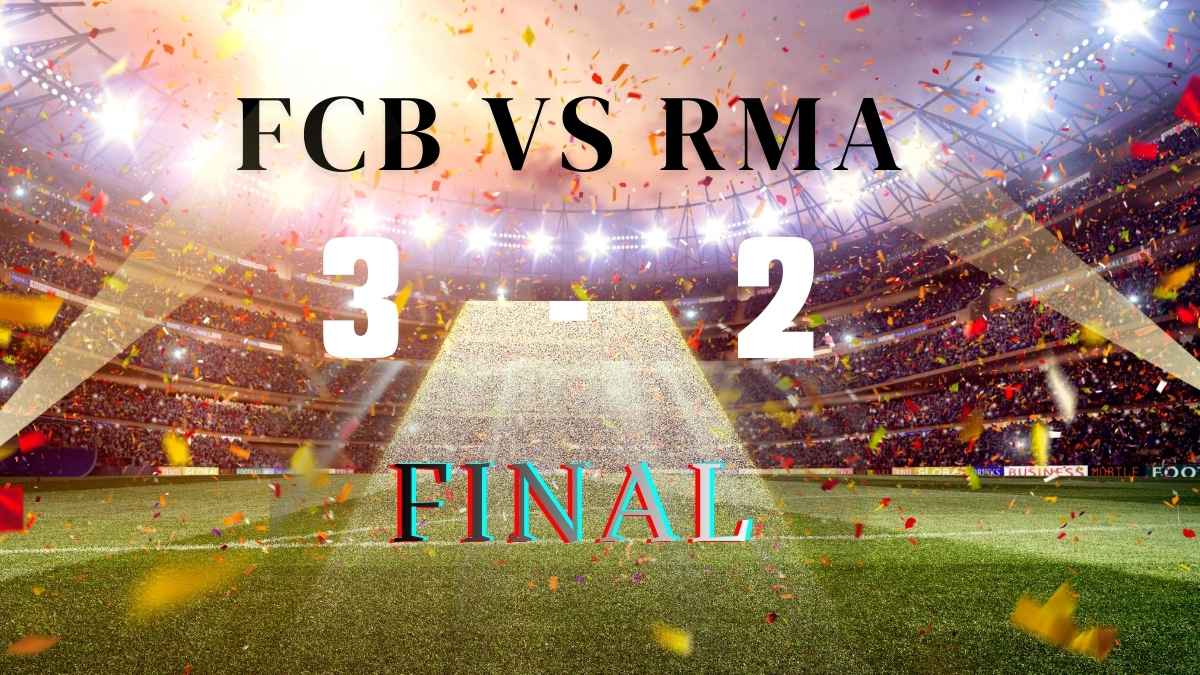
Supercopa Final 2026: FCB vs RMA Analysis — football fans across the world witnessed yet another unforgettable chapter of El Clásico. Barcelona and Real Madrid, two eternal rivals, faced off in the Supercopa 2026 final in a match filled with tactical battles, dramatic goals, and individual brilliance. In the end, it was Barcelona who lifted the trophy, thanks to a tactical masterplan by Hansi Flick and a sensational performance from Raphinha.
This final was not just a match — it was a statement. A statement of Barcelona’s evolving identity under Flick and a reminder that Real Madrid, despite their star-studded squad, can still fall short when chances are wasted.
Let’s dive deep into the complete tactical and statistical breakdown of this thrilling encounter.
Match Background and Starting XI Surprises
Even before kickoff, the excitement surrounding the Supercopa final was sky-high. Both teams arrived with slightly surprising lineups, hinting at unique tactical approaches.
Barcelona lined up in a 4-2-3-1 formation, with Robert Lewandowski leading the frontline as the lone striker. Behind him, an energetic attacking trio supported the Polish goal machine. Young defenders Cubarsí and Eric García were trusted with handling Madrid’s powerful forward line — a bold decision by Hansi Flick that raised eyebrows before the match.
In midfield, Pedri and Frenkie de Jong operated as the control tower, dictating tempo and recycling possession efficiently. Their role was crucial in implementing Flick’s possession-heavy “Total Football” philosophy.
On the other side, Xabi Alonso’s Real Madrid set up in a 4-4-2 formation, focusing on defensive compactness and lightning-fast counter-attacks. The plan was clear — absorb pressure, then strike with pace through Vinícius Jr. and Rodrygo. With Jude Bellingham roaming between lines and Mbappé waiting on the bench, Madrid looked dangerous on paper.
The stage was perfectly set.
Possession Dominance vs Counter-Attacking Speed
From the opening whistle, Barcelona asserted control. They dominated possession with a staggering 68% ball control, reflecting Flick’s signature possession-based approach. Throughout the match, Barcelona completed 661 passes with 92% accuracy, an elite-level passing performance in a high-pressure final.
Pedri and De Jong orchestrated play beautifully, constantly switching the ball and pulling Madrid’s defensive block out of shape. The Catalan side looked patient, composed, and confident in possession.
However, Real Madrid showcased why they remain one of the most lethal counter-attacking teams in world football. Despite having only 32% possession, Madrid produced 10 shots on target, more than Barcelona’s 7. Their transitions from defense to attack were rapid, driven by Vinícius Jr.’s pace and Bellingham’s forward runs.
Yet, one major issue haunted Madrid — poor finishing. They created 7 Big Chances, but shockingly missed 5 of them. In a final, such wastefulness is unforgivable.
First Half Goal Fest and Unforgettable Drama
The first half was a rollercoaster of emotions.
Barcelona drew first blood in the 36th minute, as Raphinha fired home a brilliant goal after cutting inside from the right. The stadium erupted — Barça had the lead.
But the closing moments of the first half delivered pure chaos:
-
45+2’ – Vinícius Jr. equalized with a clinical finish.
-
45+4’ – Lewandowski restored Barcelona’s lead with a poacher’s strike.
-
45+6’ – G. García stunned Barcelona by scoring again for Madrid.
In a span of just four minutes, fans witnessed three goals, ending the first half at an electrifying 2-2 draw. The momentum swung violently, keeping supporters on the edge of their seats.
Raphinha: The Undisputed Game Changer
When discussing the FCB vs RMA Supercopa 2026 Final Analysis, one name stands above all — Raphinha.
The Brazilian winger delivered a world-class performance, earning the Man of the Match award with a 9.3 rating. Constantly attacking from the right flank, he tormented Madrid’s left side with pace, dribbling, and intelligent movement.
His defining moment arrived in the 73rd minute, when he scored his second goal — the match-winner. Cutting inside and finishing clinically, he sent Barcelona fans into celebration mode and ultimately sealed the Supercopa title.
Raphinha’s stats underline his influence:
-
50% successful dribbles
-
Multiple key passes
-
Constant pressing contribution
-
Two crucial goals
This was not just a good performance — it was a big-match masterclass.
Goalkeeping and Defensive Heroics
While Raphinha stole the headlines, Barcelona’s goalkeeper García was the silent hero.
He produced 7 crucial saves, many from point-blank range. Real Madrid fired 11 shots from inside the box, yet García stood firm like a wall. Without his heroics, the result could have gone Madrid’s way.
Defensively, Barcelona had to survive a relentless Madrid onslaught in the final minutes. The Catalans made 24 clearances, showing grit and determination.
Late in the game, Ronald Araujo was brought on to reinforce the backline. His physical presence and aerial dominance helped Barcelona weather the storm during injury time.
Even after receiving a red card, reducing them to 10 men, Barcelona’s defensive organization remained impressive, highlighted by 6 crucial interceptions.
Technical Stats Overview
Here’s a snapshot of key match statistics:
| Category | Barcelona | Real Madrid |
|---|---|---|
| Expected Goals (xG) | 2.81 | 1.30 |
| Big Chances | 4 | 7 |
| Passing Accuracy | 92% | 79% |
| Corners | 5 | 6 |
Interestingly, Real Madrid generated more big chances, yet Barcelona had higher overall xG — reflecting better shot selection and clinical execution.
Deep Analysis: Why Did Real Madrid Lose?
On paper, Madrid were not outplayed in every department. In fact, their xGOT (Expected Goals on Target) was 2.61, slightly higher than Barcelona’s 2.48, meaning Madrid’s shots carried higher scoring potential.
So why did they lose?
1. Poor Finishing
Madrid missed 5 out of 7 big chances. In a final, that inefficiency proved fatal.
2. Underperforming Stars
-
Kylian Mbappé, introduced from the bench, failed to make an impact (rating 6.7).
-
Rodrygo struggled (rating 6.1).
-
Jude Bellingham was unusually quiet (rating 6.4).
When your star players fail to deliver in decisive moments, trophies slip away.
3. Tactical Discipline from Barcelona
Flick’s system neutralized Madrid’s midfield and forced them wide. Once Barcelona took the lead, they managed the game intelligently — slowing tempo, controlling possession, and defending compactly.
4. Goalkeeping Difference
García outperformed Madrid’s keeper on the night. Finals are often decided by goalkeepers — and Barcelona had the better one.
Disciplinary Battle and Physical Intensity
The match was fiercely contested:
-
Barcelona: 18 fouls, 2 yellow cards, 1 red card
-
Real Madrid: 12 fouls, 3 yellow cards
Despite playing with 10 men, Barcelona showed remarkable defensive discipline, blocking passing lanes and intercepting Madrid’s final balls into the box.
This mental strength under pressure highlighted Flick’s growing influence on the squad.
Conclusion
The Supercopa 2026 Final proved once again that football is more than numbers — it’s about seizing moments.Barcelona converted their chances efficiently, scoring in line with their xG (2.81). Real Madrid, despite creating more big chances, failed to capitalize.Hansi Flick’s tactical intelligence, García’s goalkeeping heroics, and above all, extraordinary perfRaphinha’sormance delivered Barcelona a historic El Clásico victory.For Real Madrid, this defeat serves as a harsh reminder — dominance in chances means nothing without finishing. For Barcelona, this triumph signals the dawn of a new era under Flick — disciplined, dynamic, and deadly when it matters most.