Ronaldinho Gaúcho life story
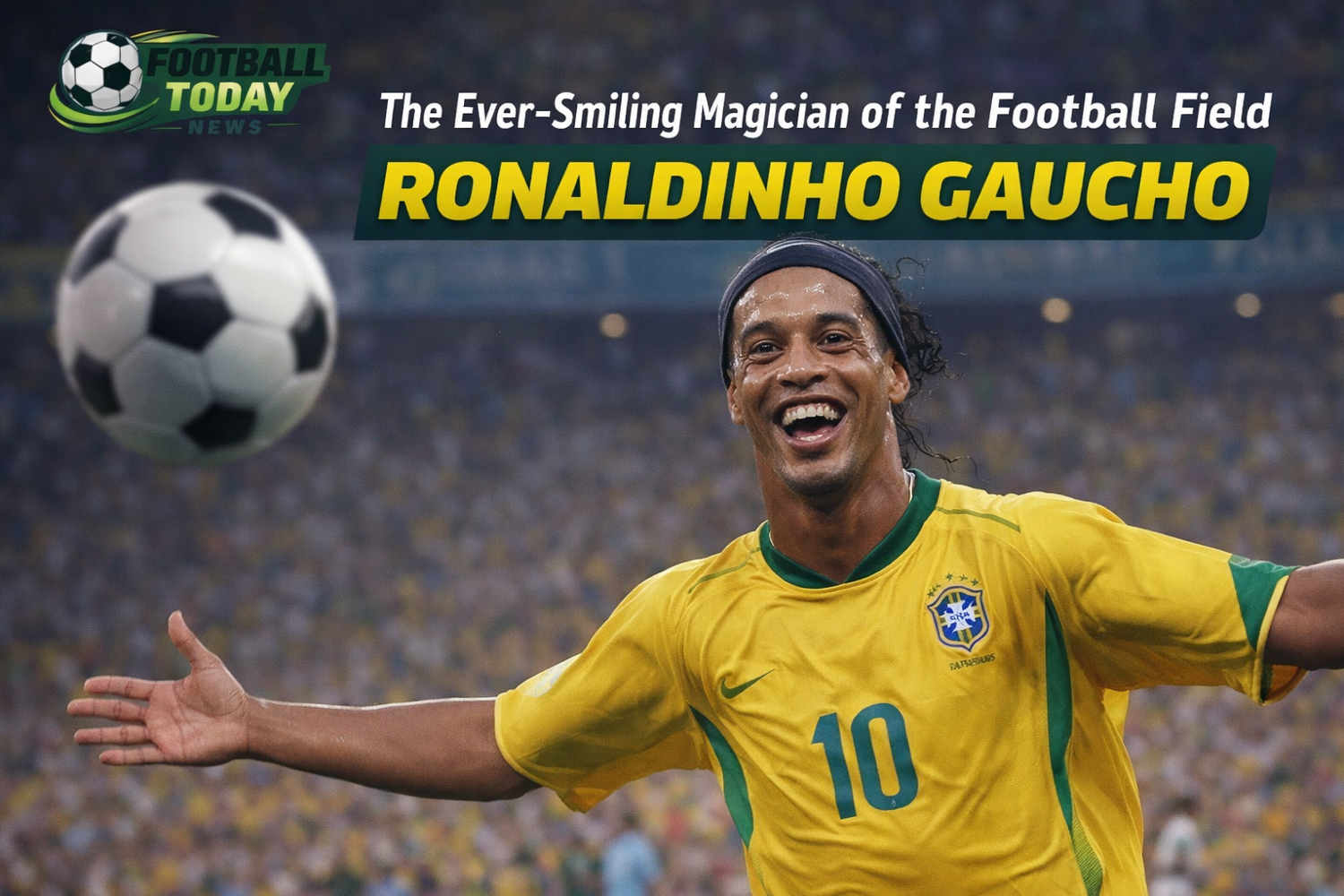
Football is often described as the “beautiful game,” but few players have embodied that beauty as purely as Ronaldinho Gaúcho. For nearly two decades, the man with the infectious smile and the lightning-fast feet turned every pitch he stepped onto into a stage for art. He didn’t just play to win; he played to entertain. This is the complete life story of the boy from Porto Alegre who became a global icon.
Introduction: More Than a Player, A Phenomenon
In an era dominated by tactical discipline and physical prowess, Ronaldinho was a breath of fresh air. Born Ronaldo de Assis Moreira, he became known to the world as Ronaldinho—the little Ronaldo. While others focused on efficiency, Ronaldinho focused on flair. His career was a masterclass in “Joga Bonito” (Play Beautifully), and his impact on FC Barcelona and the Brazilian national team remains unparalleled. To understand his greatness, we must go back to where the magic began.
The Early Years: Roots in Porto Alegre
Ronaldinho was born on March 21, 1980, in a humble neighborhood in Porto Alegre, Brazil. Football was in his blood. His father, João de Assis Moreira, was a shipyard worker who also played for a local club, and his older brother, Roberto Assis, was a rising star at Grêmio.
Tragedy struck when Ronaldinho was only eight years old; his father passed away due to a heart attack. This loss deeply affected him, and his brother Roberto took on the role of a father figure and mentor. Ronaldinho spent his youth playing futsal and beach football. It was in these tight, high-pressure environments that he developed the superhuman ball control and agility that would later define his professional career. Legend has it that he once scored 23 goals in a single game as a child—a sign of the greatness to come.
The Professional Breakthrough: Grêmio and PSG
Ronaldinho’s professional journey began at Grêmio. He made his debut in 1998 and quickly became the talk of South America. His ability to glide past defenders made him a nightmare for opponents. By 2001, Europe was calling.
He signed with Paris Saint-Germain (PSG), marking his entry into European football. While his time in Paris was filled with moments of brilliance, he often clashed with the management regarding his lifestyle. However, on the pitch, he was untouchable. He used the Parc des Princes as a laboratory for his skills, perfecting the “Elastico” and the “no-look” pass. PSG was the stepping stone he needed before conquering the world.
The Barcelona Era: Bringing Joy Back to Camp Nou
In 2003, Ronaldinho moved to FC Barcelona for a fee of approximately €30 million. At the time, Barcelona was a club in crisis, having gone years without a major trophy. Ronaldinho’s arrival changed everything. He didn’t just bring goals; he brought hope.
Under manager Frank Rijkaard, Ronaldinho became the centerpiece of a new era. In 2004 and 2005, he was named FIFA World Player of the Year. In 2005, he won the Ballon d’Or. One of his most iconic moments occurred in November 2005 during “El Clásico.” After scoring two incredible solo goals against Real Madrid at the Santiago Bernabéu, the Madrid fans—usually the most hostile toward Barça—stood up and gave him a standing ovation. It was a rare moment of sporting unity that only Ronaldinho could inspire.
International Dominance: The 2002 World Cup
While his club career was soaring, Ronaldinho was also making history with the Seleção. The 2002 FIFA World Cup in South Korea and Japan featured the legendary “Three Rs” strike force: Ronaldo, Rivaldo, and Ronaldinho.
Ronaldinho’s most famous goal came in the quarter-final against England. From 40 yards out, he noticed goalkeeper David Seaman slightly off his line and struck a looping free-kick that sailed into the top corner. Despite being sent off later in that match, his contribution was vital in leading Brazil to their fifth World Cup title.
Technical Mastery: The “Joga Bonito” Style
What made Ronaldinho different? It was his technical repertoire. He pioneered moves that are now staples of football video games.
- The Elastico (Flip-Flap): A move where he used the outside of his foot to push the ball out and then the inside to snap it back in—all in one fluid motion.
- No-Look Passes: He would stare at a defender or look toward the stands while passing the ball in the opposite direction, completely freezing the opposition.
- Free-Kick Precision: Whether it was under the wall or over it, his dead-ball strikes were lethal.
The Decline and Later Years
Like many geniuses, Ronaldinho’s peak was intense but relatively short. By 2008, his partying habits and lack of training discipline began to take a toll. He moved to AC Milan, where he showed flashes of his old self, helping the team win a Serie A title.
He eventually returned to Brazil, playing for Flamengo and then Atlético Mineiro. At Atlético, he achieved a career milestone by winning the Copa Libertadores in 2013, proving that even in his 30s, his magic hadn’t entirely faded. He officially retired in 2018, leaving behind a void that no player has quite filled since.
Conclusion
Ronaldinho Gaúcho’s life story is one of immense joy and incredible talent. He won the World Cup, the Champions League, the Ballon d’Or, and the hearts of millions. While he may not have had the longevity of Messi or Ronaldo, his peak years were perhaps the most entertaining in the history of the sport. He proved that you could reach the top of the world while having fun. Ronaldinho didn’t just play for the scoreline; he played for the soul of football.
read more : How to Get World Cup Tickets 2026?
Lionel Messi Career Stats 2026: The Definitive Guide to the GOAT’s Records